
OMV Petrom Enters Bulgarian Black Sea with 25% Stake in Khan Tervel Gas Block
Energy | March 13, 2026, Friday // 13:00| views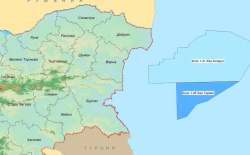
@BGNES
OMV Petrom has announced that it will join the consortium exploring the offshore Khan Tervel gas block in the Bulgarian sector of the Black Sea, marking a significant expansion of its footprint in a region of growing strategic importance for Europe’s energy security. The Romanian oil and gas company, controlled by Austria’s OMV, is among Southeastern Europe’s largest energy producers.
Under the agreement, OMV Petrom will acquire a 25% stake in the project, pending regulatory approval from Bulgarian authorities. Shell holds the operator’s position with a 42% share, while the remaining 33% is owned by Turkish Petroleum Overseas Company Limited, a subsidiary of Türkiye Petrolleri A.O. The participation contract has been signed, and finalization awaits government approval.
The Khan Tervel block covers roughly 4,000 square kilometers and is situated south of the Khan Asparuh block, which is already undergoing substantial exploration activities. The exploration license, granted in 2025 for an initial five-year period, focuses on assessing the area’s geological potential. OMV Petrom’s CEO, Christina Verchere, said the move strengthens the company’s portfolio and reinforces its long-term strategic position in the Black Sea. Executive Board Member Cristian Hubati noted that the company brings experience from the Neptun Deep project in Romania as well as the nearby Khan Asparuh block.
The next stage of the project will involve detailed 3D seismic data acquisition and analysis, forming the basis for potential future drilling. OMV Petrom will contribute financially in proportion to its stake, covering past costs and funding forthcoming exploration phases.
The Khan Tervel block’s development is part of a broader regional energy realignment. With the EU seeking more diverse natural gas sources following the Russian invasion of Ukraine, the Black Sea is emerging as a critical exploration area. Cooperation between OMV Petrom, Shell, and TPAO demonstrates the alignment of corporate, regional, and European strategic interests, highlighting energy security, investment, and geopolitical influence in the region.
OMV Petrom’s broader Black Sea portfolio reinforces its role in regional energy dynamics. The Neptun Deep project, currently under development, is the largest natural gas project in the EU. Meanwhile, the Khan Asparuh block includes NewMed Energy, through its subsidiary NewMed Energy Balkan, and Bulgarian Energy Holding, which joined the consortium in early 2026. These developments signal that exploration and energy activity in the Bulgarian and Romanian Black Sea sectors are increasingly coordinated at a regional level.
Unlike the Neptun Deep project, Khan Tervel remains in the early stages of geological assessment. Planned seismic surveys in the coming years will determine whether the block holds commercially viable reserves comparable to other projects. Nonetheless, the simultaneous development of multiple blocks suggests the Black Sea is emerging as a major new energy zone in Southeastern Europe.
The success of these exploration efforts will depend on geological results, technical feasibility, environmental compliance, regulatory approvals, and the broader geopolitical context. Should the surveys and potential drilling confirm significant reserves, the Black Sea could become a critical component of Europe’s energy supply, particularly for Southeastern Europe. In this sense, the Khan Tervel block represents not only an individual project but a step toward reshaping the region’s energy landscape.
Back