
Bulgaria Urges Iran to Abandon Nuclear Programme as Thousands of Bulgarians Remain Stranded in War Zone
Politics | March 2, 2026, Monday // 15:03| views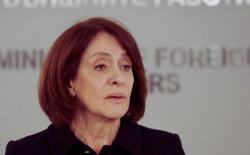
Acting Foreign Minister Nadezhda Neynsky
On March 1, 2026, Acting Foreign Minister Nadezhda Neynsky joined an extraordinary videoconference session of the EU Foreign Affairs Council focused on the rapidly deteriorating situation in the Middle East. Participants voiced deep concern over the intensifying military strikes and the potential fallout for both regional stability and European security. EU ministers expressed firm backing for Gulf partners affected by Iranian attacks and reaffirmed the importance of upholding international law and the UN Charter. A return to negotiations was described as essential, alongside Iran’s full compliance with its obligations under the Treaty on the Non-Proliferation of Nuclear Weapons. Continued coordination among member states, particularly regarding the safety and evacuation of European citizens, was also agreed.
In her remarks, Neynsky described the crisis as a fundamentally new phase for the Middle East, carrying serious risks for Europe. She argued that Iran’s new leadership must be persuaded to resume talks, halt its nuclear and ballistic missile programmes, and cease support for Russia’s war in Ukraine. She also backed the idea of a joint meeting between EU and Gulf Cooperation Council foreign ministers, reiterating that protecting Bulgarian citizens in the region and ensuring their safe evacuation remains the government’s foremost priority.
Domestic political reactions have reflected concern over the broader implications of the conflict. BSP leader Krum Zarkov warned that another destructive war in the Middle East would have negative consequences for Bulgaria and Europe alike. He urged authorities to prevent the country from being drawn into hostilities and to provide clear information to the public amid rising anxiety. While acknowledging calls for convening the National Security Consultative Council, Zarkov said institutional procedures should be respected and cautioned against exploiting public fears, emphasizing instead the need for calm, professionalism and transparency.
Meanwhile, the Revival party called for an emergency sitting of Parliament, citing the worsening international climate and what it views as proximity of military actions to Bulgaria. The party proposed that lawmakers debate a draft decision aimed at preventing the use of Bulgarian territory, airspace or maritime zones for military operations against third countries. It referenced the reported Iranian drone strike on a British base in Cyprus and the presence of US military aircraft at Sofia Airport as grounds for urgent discussion, insisting that the National Assembly adopt a clear position to avoid entanglement in the conflict.
The escalation followed the joint US-Israeli operation “Roaring Lion” and “Epic Fury,” launched to dismantle Iran’s nuclear programme. Strikes reportedly began early Saturday morning and, according to initial accounts, resulted in the deaths of several senior Iranian figures, including Supreme Leader Ayatollah Ali Khamenei, former president Mahmoud Ahmadinejad, Defence Minister Aziz Nasirzadeh and Revolutionary Guard commander Mohammad Pakpour. In response, Iran targeted not only American and Israeli military facilities but also civilian sites in neighbouring countries such as Oman, the United Arab Emirates, Jordan, Kuwait, Bahrain and Qatar.
More than 11,400 Bulgarian citizens are believed to be in the affected region. Neynsky stated that evacuation plans are ready and aircraft can be dispatched once a safe corridor becomes available. She advised citizens to remain in secure locations and follow official instructions, assuring the public that consular services are operating continuously and that regular briefings are being organised. The Foreign Ministry’s Situation Centre hotlines remain active around the clock.
US aircraft stationed at Sofia Airport are expected to remain until the end of May and, according to Bulgarian authorities, are present solely for training purposes under previously agreed arrangements. Deputy Defence Minister Yordan Bozhilov stressed that Bulgaria has neither been asked to participate in the conflict nor intends to do so.
Accounts from Bulgarians living in Israel underline the uncertainty on the ground. Vesela Raytchinova, who has resided there for decades, described the latest strikes as part of a longer trajectory of unrest, recalling earlier protests in Iran and calls for external intervention. She noted that the precise number of Bulgarians currently in Israel is unclear but confirmed that efforts are underway to register and assist those seeking departure, including Anton Andonov, a deputy rector from Plovdiv visiting for a cultural seminar that has since been cancelled. He is expected to leave as soon as conditions permit.
Observers describe the unfolding crisis as volatile and difficult to predict, with the risk that hostilities could widen further beyond the Middle East.
Back