
Bulgaria: No Direct Military Threat as Authorities Activate Crisis Measures Amid Middle East Escalation
Politics | February 28, 2026, Saturday // 16:31| views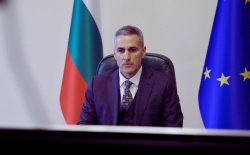
The Security Council under the Council of Ministers has concluded that there is currently no direct military threat to Bulgaria’s territory following the escalation of hostilities in the Middle East. After nearly three hours of deliberations, Acting Prime Minister Andrey Gyurov stated that the country is not involved in the conflict and is not participating in any military operations. He underlined that Bulgarian territory has not been requested for combat purposes and that there has been no change in the combat readiness of the armed forces. According to him, there are no risks to the life, health or daily security of citizens in Bulgaria.
Gyurov said the government continues to closely monitor developments, with national security and the safety of Bulgarian nationals in the region identified as top priorities. The Interior Ministry and security services have introduced precautionary measures to safeguard public order. Border authorities remain on heightened alert amid assessments of potential migration pressure. A 24-hour crisis headquarters is operating at the Ministry of Foreign Affairs (MFA), coordinating with diplomatic missions and institutions. Gyurov also stressed that fuel supplies are secured for the coming months and that alternative energy routes have been arranged to prevent disruption.
Defence Minister Atanas Zapryanov reiterated that Bulgaria cannot be considered a direct target in the current situation. He specified that there are no strike weapons stationed at Novo Selo or Graf Ignatievo and that Bulgaria is not engaged in the military operation, making the country ineligible as a participant in the conflict.
Foreign Minister Nadezhda Neynski provided updated data on Bulgarian nationals in the affected region. More than 10,000 Bulgarian citizens permanently reside in Israel, with the actual number exceeding that figure; over 95% hold dual citizenship and do not speak Bulgarian. In Iraq there are 140 Bulgarian nationals and more than 360 dual citizens. Around 300 Bulgarians are in Qatar, 185 of whom are registered with the embassy. In total, approximately 11,400 Bulgarian citizens are located in the broader conflict zone. Evacuation scenarios have been prepared, and discussions are under way with Azerbaijan regarding potential land-border crossings if needed. The MFA urged citizens in Iran and neighbouring states to strictly follow the instructions of local authorities and Bulgarian diplomatic missions and to register in the ministry’s online travel system.
In a separate statement, the MFA expressed concern over the escalation after the United States and Israel launched large-scale military action against Iran. Bulgaria has repeatedly voiced apprehension regarding Iran’s nuclear and missile programmes, as well as its destabilising role in the region. The ministry confirmed ongoing coordination with European partners to assess risks to EU citizens, with priority given to Bulgarian nationals. As of 3:00 p.m. on February 28, 2026, airports in Oman, Egypt, Pakistan, Turkmenistan, Armenia, Azerbaijan, Turkey and Cyprus remained operational, and citizens were advised to consider departing via civil flights from those locations. The situation remains fluid and subject to updates.
Political reactions followed domestically. Kostadin Kostadinov, leader of the Revival party, called for the president to convene the National Security Advisory Council in response to the strikes on Iran. The party also urged parliamentary forces to condemn what it described as an Israeli attack.
Air travel across the region has been heavily disrupted. Bulgaria Air canceled all flights to and from Tel Aviv until March 2 due to the closure of Israeli airspace. Wizz Air suspended services to Israel, Dubai, Abu Dhabi and Amman until March 7. Turkish Airlines halted flights to Lebanon, Syria, Iraq, Iran and Jordan until March 2. Lufthansa suspended services to Tel Aviv, Beirut, Amman, Erbil and Tehran until March 8, while canceling weekend flights to and from Dubai and Abu Dhabi. SWISS suspended Tel Aviv flights until March 7 and canceled Zurich–Dubai services for two days.
Air France-KLM canceled scheduled flights to Tel Aviv and Beirut, while KLM suspended its Amsterdam–Tel Aviv route. Virgin Atlantic announced rerouting to avoid Iraqi airspace, leading to one cancellation. British Airways halted flights to Tel Aviv and Bahrain until March 3 and canceled a service to Amman. Norwegian Air suspended Dubai flights until March 4. Air Algerie canceled routes to Amman, Dubai and Doha. Japan Airlines scrapped its Tokyo–Doha flight and a return service on March 1. Air India suspended all flights to Middle Eastern destinations. Russia’s aviation regulator Rosaviatsia ordered a halt to commercial flights to Iran and Israel until further notice and directed airlines to use alternative routes to the Gulf following airspace closures in several states.
Israel closed its airspace to civilian traffic as the strikes began, while Syria temporarily shut southern air corridors near the Israeli border. Flight tracking data showed no aircraft operating over Iran and Iraq, reflecting the broad impact of the escalating security situation on regional aviation.
Back