
Iran War Day 41: Ceasefire on Edge as Lebanon Burns and Global Tensions Rise
World | April 9, 2026, Thursday // 10:00| views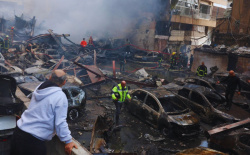
Lebanon has declared a national day of mourning after one of the deadliest days in recent months, with at least 254 people killed and more than 1,165 injured in Israeli strikes carried out shortly after the announcement of a US-Iran ceasefire. Prime Minister Nawaf Salam said authorities are mobilising “all of Lebanon’s political and diplomatic resources to stop the Israeli killing machine,” as the country grapples with the scale of the destruction and loss.
Disputes over the scope of the ceasefire quickly surfaced. Israeli Prime Minister Benjamin Netanyahu stated that Lebanon is not covered by the agreement, a position echoed by US Vice President JD Vance, who stressed: “We never made that promise.” However, Pakistani Prime Minister Shehbaz Sharif, who helped mediate the truce, had indicated that the deal included Lebanon. Iran’s Foreign Minister Abbas Araghchi backed that interpretation, insisting the “terms are clear” and warning Washington it must choose between a genuine ceasefire or “continued war via Israel,” adding that “it cannot have both.”
Tehran has made halting Israeli operations in Lebanon a central demand. President Masoud Pezeshkian said stopping those attacks is part of Iran’s proposed 10-point plan to end the broader conflict. At the same time, Iran’s parliament speaker Mohammad Bagher Ghalibaf argued that ongoing developments render negotiations “unreasonable,” citing what he described as violations, including continued strikes in Lebanon, a drone entering Iranian airspace and restrictions on Iran’s enrichment rights. A US official rejected the Iranian version of the plan, saying “the document being reported… is not the working framework.”
Diplomatic efforts are intensifying despite the confusion. JD Vance is set to lead US talks with Iran in Pakistan, joined by envoy Steve Witkoff and Jared Kushner, although Tehran has expressed distrust toward them. French President Emmanuel Macron has urged all sides to include Lebanon in the ceasefire, calling it the “best path to peace,” while the United Nations and the International Committee of the Red Cross condemned the violence. UN rights chief Volker Turk described the scale of the attacks as “nothing short of horrific,” adding that such bloodshed so soon after a truce “defies belief.”
Across the Gulf, the conflict continues to spill over. Kuwait reported “severe material damage” after drone strikes targeted key oil and energy infrastructure, while in Abu Dhabi debris from intercepted projectiles caused fires and injured three people, disrupting operations at the Habshan gas complex. Qatar said it intercepted seven missiles and drones, Saudi Arabia reported strikes on critical pipelines, and Bahrain confirmed damage and injuries from intercepted attacks. The UAE has sought urgent clarification on the ceasefire, warning that uncertainty risks prolonging instability.
In Washington, officials appear divided over what was actually agreed. Reports point to “no clarity whatsoever” on whether Lebanon was included, while the White House insists it was not. Protests erupted in New York, with demonstrators demanding an end to the war and the bombing of Lebanon. Meanwhile, Reza Pahlavi dismissed claims by Donald Trump of a “very productive regime change” in Iran, saying the leadership remains fundamentally unchanged.
Israel has signalled it is prepared for further escalation. Netanyahu said the country still has “objectives to complete” and could return to fighting if necessary. At the same time, Hezbollah announced it had launched rockets at northern Israel, citing “violations” of the ceasefire. Iranian Revolutionary Guard officials warned they would “deliver a response” if Israeli strikes continue, reinforcing fears that the truce could collapse.
The situation around the Strait of Hormuz remains highly uncertain. Iran has suggested alternative shipping routes due to suspected sea mines and has reportedly restricted passage again after briefly reopening the waterway under ceasefire conditions. Tehran has warned it could fully shut the strategic chokepoint if attacks persist, raising concerns for global energy supplies.
With negotiations expected in Islamabad, tensions remain high. Iranian officials say talks will proceed despite public sceptizism, while US President Donald Trump has warned that American forces will remain deployed until a “real agreement” is reached, threatening “bigger, and better, and stronger” strikes if diplomacy fails. As the ceasefire’s terms remain contested and violence continues, the risk of a broader regional escalation appears far from contained.
Back