
Ex-Economy Minister: Claims That Eurozone Drove Prices Up Are False, Inflation in Bulgaria Remains Low
Politics | April 4, 2026, Saturday // 12:12| views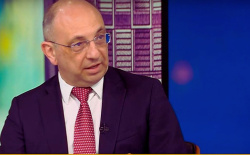
Nikolay Vassilev, former Minister of Economy
Nikolay Vassilev, former Minister of Economy, dismissed claims that prices in Bulgaria have doubled following eurozone-related developments, arguing instead that inflation remains low and that public fears about sharp price increases are exaggerated.
Speaking on Nova TV, Nikolay Vassilev stated that the idea of a general doubling of prices linked to eurozone entry is false. He pointed to recent monthly inflation figures, citing 0.6% in January, 0.4% in February, and 0.7% in March, describing them as very low in a historical context.
He argued that, when compared with the past 35 years of Bulgaria’s transition, these winter months represent some of the lowest inflation levels recorded. He also referenced the 1996 financial crisis, when inflation surged dramatically, contrasting it with the current situation to underline his point.
Addressing energy costs, Vassilev acknowledged an increase in oil prices linked to geopolitical tensions in the Middle East, but said current levels remain far below historical peaks. He recalled that in 2008 oil reached around 7 per barrel, while Bulgarian incomes at the time were significantly lower, adding that today’s higher income levels place price movements in a different economic context.
He also rejected the need for emergency compensation measures adopted in some European countries such as Austria, France, Germany, and Greece, arguing that fuel prices there remain higher than in Bulgaria despite such interventions. According to him, extraordinary measures would only be justified in extreme scenarios, not under current conditions.
Commenting on state support policies, he criticized the handling of a 20-euro aid scheme for vulnerable groups, saying it was poorly designed and administratively inefficient. He argued that the process created unnecessary bureaucracy, resulted in low uptake, and led to limited distribution of funds, questioning whether such measures effectively target those most in need.
Vassilev further stated that the state cannot systematically compensate for every price increase, describing such an approach as economically unsustainable. He said governments tend to spend excessively without implementing structural reforms, pointing to what he described as an oversized public sector and numerous unfilled or inefficient positions.
In his view, the core issue lies in state ownership of enterprises that should be privatized or transferred to concession management. He argued that the private sector operates more efficiently in terms of staffing and wages, while inefficiencies are concentrated in state structures.
Back