
Secret EU Files at Risk: Is Germany’s Far-Right Party Feeding Russia?
EU | March 24, 2026, Tuesday // 12:00| views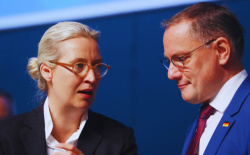
Access by the far-right Alternative for Germany (AfD) party to sensitive EU documents has sparked concern among diplomats and lawmakers about the potential exposure of confidential deliberations to Moscow, according to POLITICO, citing several EU diplomats and German MPs. The databank available to Bundestag parliamentarians, including AfD members, contains thousands of EU files, including detailed notes from ambassadorial meetings where countries coordinate positions on geopolitical matters such as financing Ukraine with frozen Russian assets.
Greens lawmaker Anton Hofreiter, chair of the Bundestag EU Affairs Committee, noted that suspicions of AfD leaks to Russia or China are influencing how sensitive discussions are conducted. Diplomats are reportedly cautious, with some holding smaller meetings due to fears that “less-than-loyal” countries or actors might transmit information to Moscow. While Budapest faced media accusations of sharing confidential EU leader discussions with Russia—a claim denied by Hungary’s foreign minister—AfD access to the database is seen by some as leaving a “Putin-shaped hole” in EU security measures. Diplomats stressed that in forums with all 27 EU states, sensitive information cannot be shared as freely as in smaller, trusted circles.
AfD denies leaking information to foreign powers, calling such allegations “baseless.” Nevertheless, the party’s open access to EuDoX, a Bundestag-managed system containing roughly 25,000 restricted EU documents annually, remains controversial. While the platform was designed to allow MPs and aides to monitor government activity—a safeguard against unchecked executive power—some lawmakers argue that AfD connections to Russia, including trips to Moscow, adoption of Russian propaganda narratives, and interactions with the Russian embassy, heighten security risks. Critics warn that this access could reveal information about Western arms shipments to Ukraine, local drone defenses, and Russian hybrid operations in the Baltic Sea.
Centrist German MPs, including Roland Theis from Chancellor Friedrich Merz’s conservative bloc, described AfD’s handling of sensitive data as worrying. Previous allegations suggested the party used parliamentary inquiries to collect information of interest to the Kremlin, although leadership denies these claims. Earlier in 2025, a former aide to AfD MEP Maximilian Krah was convicted of spying for China. In response, the Bundestag administration took steps last year to limit access for certain AfD staff members to parliamentary buildings and IT systems.
Meanwhile, separate concerns have emerged regarding Hungary. Foreign Minister Péter Szijjártó admitted to regular contact with Russian Foreign Minister Sergei Lavrov during private EU meetings, following initial media reports he dismissed as “fake news.” Szijjártó explained that discussing EU-related matters, including energy, automotive, and security issues, with partners outside the bloc is part of routine diplomacy. He emphasized that no classified ministerial secrets are exchanged, highlighting that ministers routinely bring phones into meetings. The minister noted his extensive engagement with multiple international partners, including the US, Turkey, Israel, and Serbia, ahead of and following EU Council meetings.
Szijjártó’s confirmation comes amid heightened political tensions ahead of Hungary’s parliamentary elections, with Prime Minister Viktor Orban’s Fidesz party facing a strong challenge from opposition leader Péter Magyar. Hungary remains one of the few EU countries with ongoing close ties to Moscow and continues to import significant volumes of Russian fossil fuels despite EU efforts to reduce dependence. Since February 2022, Szijjártó has visited Moscow sixteen times, including a meeting with President Vladimir Putin on 4 March, underscoring Budapest’s persistent Kremlin connections.
Back