
March 3rd: Celebrating the Day Bulgaria Was Freed
Culture | March 3, 2026, Tuesday // 09:34| views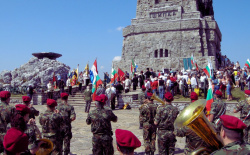
@Wikimedia Commons
Five centuries is a long time to wait. That is how long Bulgaria spent under Ottoman rule - from the late 14th century until the morning of March 3, 1878, when a peace treaty signed in a small village outside Constantinople gave the Bulgarian state back to the Bulgarian people. That date became the country's National Day, and it remains one of the most emotionally charged days on the Bulgarian calendar.
How It Happened
The road to March 3rd ran through rivers of blood. The April Uprising of 1876 was the boiling point - a Bulgarian revolt against Ottoman rule that was crushed with appalling brutality. Entire villages were massacred. The atrocities shocked Europe and gave Russia the moral and political cover it needed to declare war on the Ottoman Empire in 1877. The uprising was a clear signal to the world that Bulgarians had the resolve to break free from the power of the sultan.
The Russo-Turkish War that followed was brutal and short. Russian forces pushed south through the Balkans in winter conditions that would have stopped most armies. Bulgarian civilians fed them, housed them, built field hospitals, and guided them through mountain passes. It was an all-national campaign, a spontaneous patriotism, because people clearly saw the chance of Bulgaria to get liberated. The decisive confrontation came at the Shipka Pass, where Russian and Bulgarian volunteer forces held off Ottoman attacks in some of the bloodiest fighting of the entire war.
By January 1878 the Ottoman military had collapsed. Russian forces were camped on the outskirts of Constantinople. The Treaty of San Stefano was signed on March 3, 1878, establishing an autonomous self-governing Principality of Bulgaria with a Christian government and the right to keep an army.
The Bitter Aftermath
Here is where the story gets complicated. The San Stefano treaty created a large Bulgaria: stretching from the Danube to the Aegean, from the Black Sea deep into Macedonia. It was everything Bulgarian nationalists had dreamed of. It lasted four months. Britain and Austria-Hungary opposed the treaty, fearing that the new Bulgarian state would become a Russian satellite threatening their influence in the eastern Mediterranean and the Balkans. At the Congress of Berlin in July 1878, the great powers carved Bulgaria back up. Macedonia was returned to the Ottomans. The country was split in two. What had felt like total liberation was suddenly a partial one.
Historians have argued that had the San Stefano treaty been fully implemented, it would probably have averted many conflicts on the Balkan peninsula throughout the 19th and 20th centuries. Instead, the unfinished business of 1878 haunted Bulgarian foreign policy for generations, pulling the country into the Balkan Wars and ultimately into both World Wars on the wrong side, chasing borders that kept slipping away.
What March 3rd Means Today
Despite all of that, Bulgarians chose March 3rd as their national day rather than any later date of full formal independence.
Today there are over 400 preserved monuments across Bulgaria dedicated to the soldiers who fought for its freedom. Every March 3rd, wreaths are laid at the Shipka Pass memorial, flags are raised in town squares across the country, and schoolchildren learn, again, what it cost to get here.
In 2026, with war raging in the Middle East and Europe's security architecture under strain, March 3rd carries a different kind of weight. Bulgaria has been a NATO member since 2004 and an EU member since 2007. The country that spent five centuries waiting for someone to recognize its right to exist now sits at the table of Europe's most powerful alliances. That too is worth remembering on March 3rd.
Back