
Bulgaria: Who's Who in Andrey Gyurov's Caretaker Cabinet
Politics | February 18, 2026, Wednesday // 18:15| views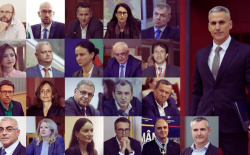
"The list of ministers will be made up of people with experience, expertise and decency." That was Andrey Gyurov's benchmark when he was named Bulgaria's next caretaker prime minister. A look at the names he announced shows this description largely holds up, though not without nuance.
This is Bulgaria's seventh consecutive caretaker cabinet since 2020, following Stefan Yanev's two governments in 2021, Galab Donev's two in 2022–2023, and Dimitar Glavchev's two in 2024–2025. What sets Gyurov's lineup apart from its immediate predecessors is the relative absence of overtly politicized figures. Where Glavchev's cabinets leaned heavily on personnel loyal to Delyan Peevski and GERB insiders, Gyurov has reached for technocrats, former officials, and civil society figures.
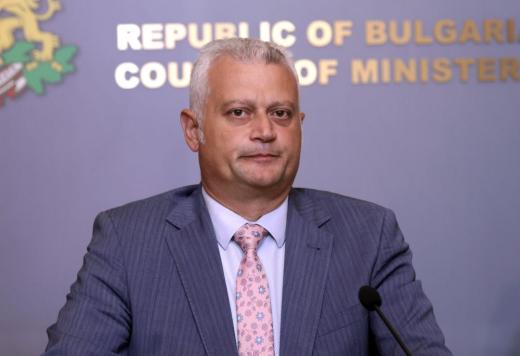
The most important appointment is Interior Minister Emil Dechev, who will have a direct role in organizing the April 19 elections and fighting vote-buying. Dechev brings nearly 30 years in the judiciary - starting as an investigator in 1996, becoming a judge in 2000, and serving at the Sofia City Court since 2012. He holds EU law degrees from France and Bulgaria, interned at the Court of Justice of the EU in Luxembourg, and has been a prominent voice for judicial independence through the Union of Judges. He served as Deputy Minister of Justice under three successive ministers between 2022 and 2024, until he was dismissed by the Glavchev government. His reputation for independence makes him a pointed choice for the role.

Equally significant is the appointment of Andrey Yankulov as Deputy Prime Minister and Minister of Justice. Yankulov has spent years at the Anti-Corruption Fund investigating criminal networks of influence inside Bulgaria's judicial system - including the schemes linked to Pepi "Evroto" and Martin Bozanov "Notariusa". Gyurov was explicit about what he expects: Yankulov, who led the investigation into the so-called "Eight Dwarfs" case, is expected to push for the removal of Borislav Sarafov, who has been occupying the top position in the Prosecutor's Office without a legitimate mandate. Yankulov himself has stated that after July 21, 2025, Bulgaria effectively has no Prosecutor General in legal terms. The attacks on his candidacy from pro-establishment media in the days before his appointment were, if anything, a testament to his credibility.
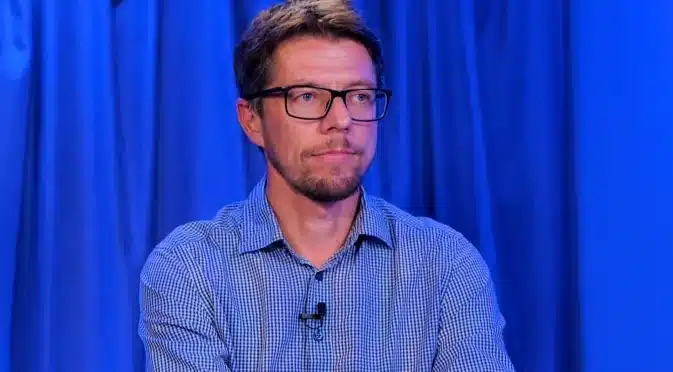
A new role has been created specifically for the elections: Deputy Prime Minister for Fair Elections, filled by Stoil Tsitselkov - a cultural anthropologist, one of the founders of the Public Council of the Central Election Commission, and an internationally experienced electoral observer across five continents.
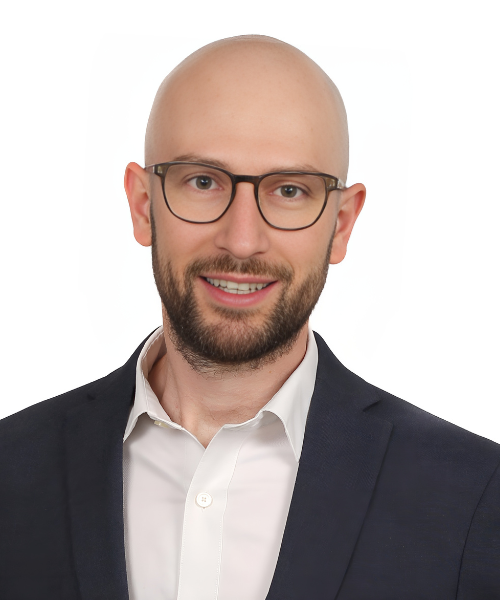
Finance Minister Georgi Klisurski is the name most directly connected to "We Continue the Change" - he was deputy finance minister under Nikolai Denkov and previously an advisor to Asen Vassilev. He holds an MBA from Wharton and an MPA from Harvard Kennedy School. After the 2024 elections he joined the team of Sofia Mayor Vasil Terziev, and left the party in disgust following the summer 2025 procurement scandal. He is widely considered an expert rather than a political operative.
Further reading: Will Radev and the Liberals Join Forces? What the Caretaker PM Choice Really Means for Bulgaria
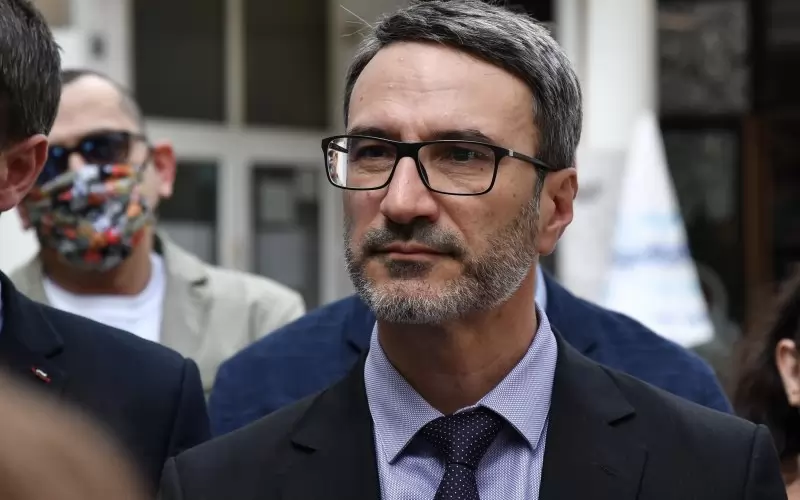
Energy Minister Traycho Traykov is one of the few politicians from the last two decades who has retained a genuinely technocratic image. He was Energy Minister under Borissov's first government, where he clashed with Lukoil's Valentin Zlatev and opposed the Belene nuclear plant - leading to his abrupt dismissal in 2012. He later became mayor of Sofia's Sredets district, where he drove the removal of the Monument to the Soviet Army.

Defense Minister Atanas Zapryanov is the one holdover from the outgoing cabinet - retained for continuity, as Bulgaria stands on the verge of a historic 3.26 billion euro injection under the EU's SAFE defense program. The advance financing of 490 million euros depends on signing a credit agreement urgently, and Zapryanov has already negotiated a postponement until mid-March to allow time for the new government to act.
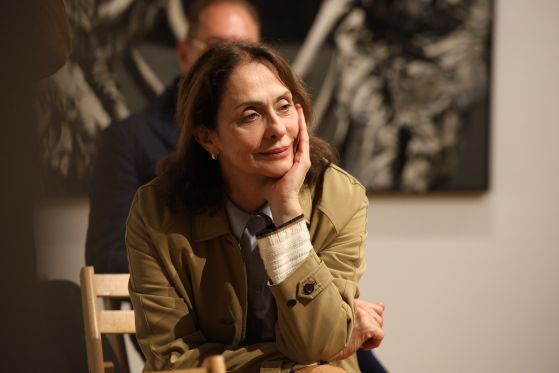
Nadezhda Neynski (Foreign Affairs) returns to a role she held in the 1997–2001 SDS government, during which Bulgarians gained visa-free access to EU countries. She subsequently chaired the Union of Democratic Forces (SDS), served as an MEP, and was Bulgaria's Ambassador to Turkey from 2015 to 2020.

Hasan Ademov (Labor and Social Policy) is a physician by training and one of the longest-serving DPS/APS MPs, having been in parliament continuously since 1997. He previously led the same ministry under the Oresharski government and chaired the parliamentary Social Health Committee for many years. When the MRF split, he stayed on Ahmed Dogan's side despite significant pressure.

Yulian Popov (Environment) returns to a portfolio he has held twice before - in the caretaker Raykov cabinet in 2013 and in the Denkov government in 2023–2024. A Senior Advisor to the European Climate Foundation and twice ranked by EurActiv as one of the 40 most influential voices in European energy policy, he was also one of Bulgaria's two candidates for EU Commissioner in 2024.

Sergey Ignatov (Education) is an Egyptologist, academic and former rector of the New Bulgarian University, and the first Bulgarian elected rector of a foreign university - the European University for the Humanities in Vilnius. He was Minister of Education under Borisov's first government, a period marked by both reform ambitions and controversy, including a matriculation exam scandal and issues at the Scientific Research Fund that led to his dismissal in 2013.

Mihail Okoliyski (Health) served as Deputy Health Minister in the Denkov cabinet, where he also chaired the supervisory board of the National Health Insurance Fund. A graduate of Humboldt University in Berlin with a doctorate in psychotherapy, he was Bulgaria's WHO representative from 2014 to 2023. He is known as a supporter of prevention and vaccination, and as a diplomatic, dialogue-oriented figure.

Georgi Sharkov (e-Government) is a mathematician and AI researcher, Associate Professor at the Bulgarian Academy of Sciences, and Managing Director of the European Software Institute in Sofia since 2004. He is a former cybersecurity advisor to the Ministry of Defense and head of the Cybersecurity Lab at Sofia Tech Park, and a co-founder of BASSCOM, the Bulgarian software industry association.

Angelina Boneva (Regional Development) is an expert in European funds and strategic planning, with experience across the Ministry of Finance, Ministry of Economy, and the Ministry of Regional Development. She led the General Directorate for Strategic Planning at the Regional Ministry in 2022, and served as Deputy Minister under the second caretaker Donev government in 2023.

Irina Shtonova (Economy) served as Deputy Minister of Economy in both the Donev and Denkov cabinets. Before entering public service, she was Vice President of Marketing and Strategy at AT&T and held a director-level role at DirecTV. She holds a PhD in Economics from Sofia University and an MBA from Stanford.
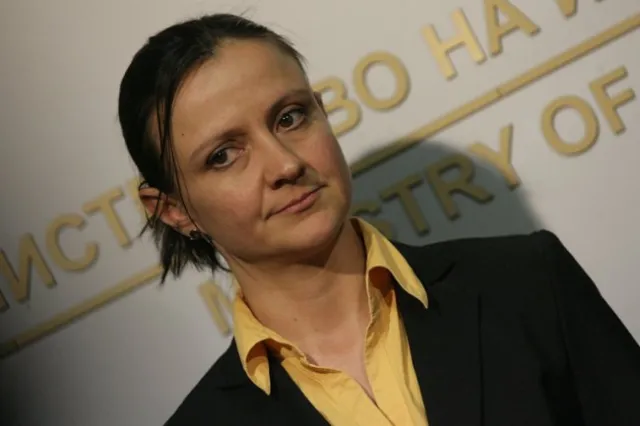
Irena Mladenova (Innovation and Growth) has been Deputy Minister of Economy three times - in the Raykov, Bliznashki and Yanev caretaker governments. She is currently a lecturer at Sofia University's Faculty of Economics and has consulting experience at Kearney and PwC.

Ivan Hristanov (Agriculture) was Deputy Minister of Agriculture in the Petkov cabinet, where he led the fight to reclaim the Kapitan Andreevo border crossing from a private monopoly linked to figures with criminal nicknames - a battle that drew international attention and included threats and bribery attempts. He later founded his own party, "Unity," after leaving WCC.

Korman Ismailov (Transport) is among the founders of the DPS and a former head of its youth organization, expelled from the party in 2011 alongside Kasim Dal. The two went on to found the People's Party "Freedom and Dignity," which joined the Reformist Bloc. Ismailov served as an MP in the 43rd National Assembly, then stepped back from politics after 2017. His return to a ministerial role is considered the cabinet's biggest surprise.

Nayden Todorov (Culture) is a conductor and director of the Sofia Philharmonic, serving as caretaker Culture Minister for the third time, after stints in the second Donev and first Glavchev governments. His previous terms were marked by the National Theatre dispute and a scheme to drain state theaters through fictitious appointments.
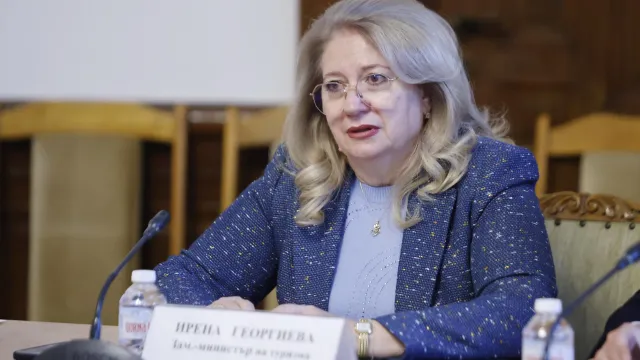
Irena Georgieva (Tourism) was Deputy Minister of Tourism in the outgoing Zhelyazkov government and previously under Minister Nikolina Angelkova in the second and third GERB governments. She has spent most of her career in the travel industry, including leadership roles in Bulgarian and European tour operator associations.
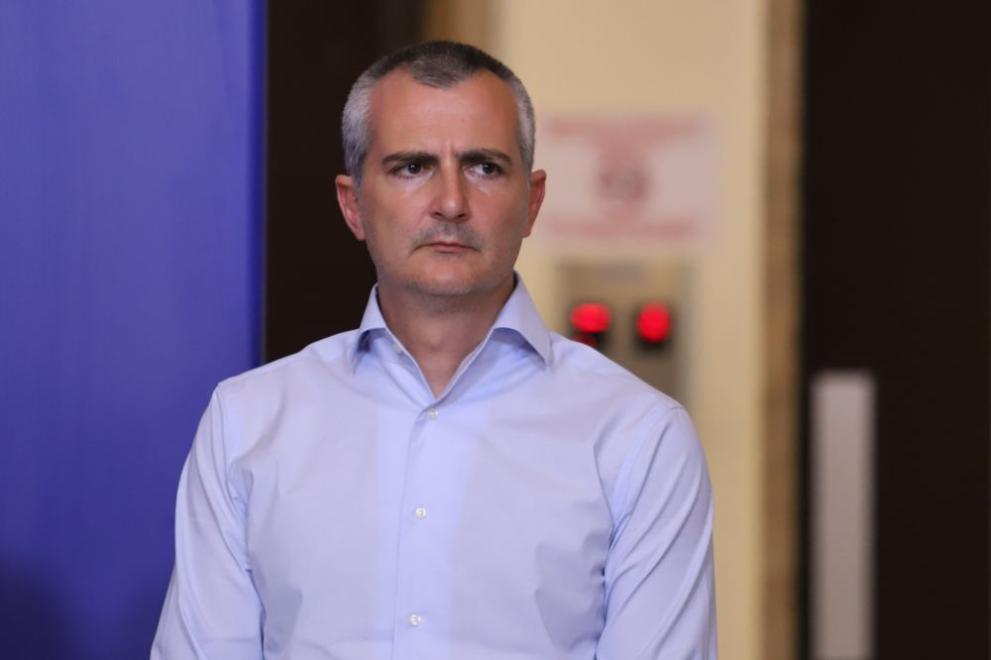
Dimitar Iliev (Youth and Sports) returns to the same portfolio he held in the Denkov cabinet. An eight-time Bulgarian rally champion and three-time winner of the Rally Bulgaria, he now teaches at the National Sports Academy.
Gyurov's cabinet is not without political fingerprints - it never could be. But the overall composition suggests a genuine attempt to staff the government with people who know their portfolios and have something to lose if they don't do the job.
Back